
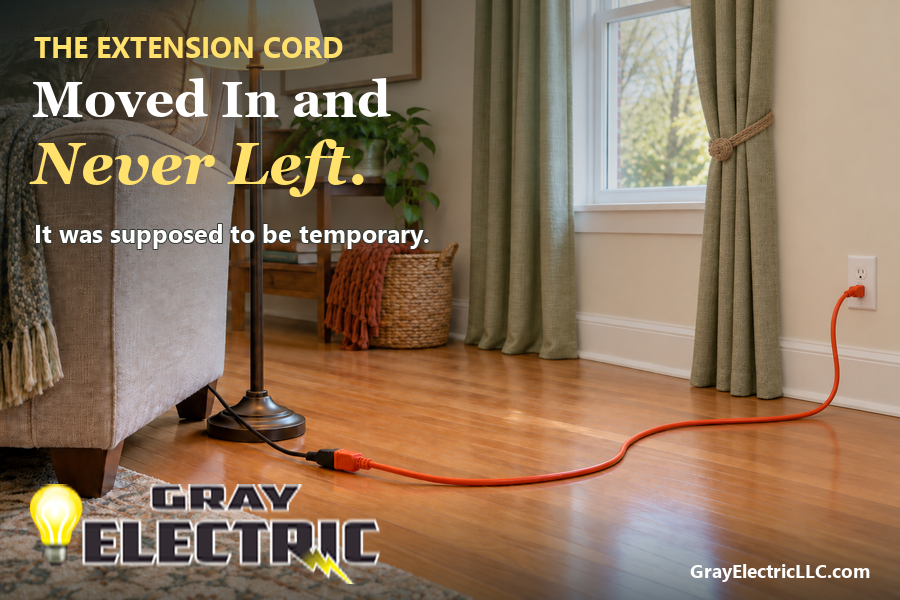
The Extension Cord That Moved In and Never Left
When you plugged in that extension cord behind the couch, you probably told yourself it was temporary. You needed a lamp beside your favorite chair, and the nearest outlet was inconveniently located behind a bookcase. The cord solved the problem, so you moved on to more pressing matters.
Three years later, it is still there. At this point, it has survived two furniture arrangements and may qualify for a place in the family photo.
Most households have a version of this story. A spare bedroom becomes a home office, a garage gains a workbench, or a new piece of furniture changes where everything belongs. Our lives evolve, but the electrical outlets usually stay exactly where they were installed.
An extension cord can help with a temporary task. When it becomes part of the everyday setup, however, it may be time to consider whether your home’s electrical system still meets your needs.
How a convenient solution becomes a daily workaround
The trouble with a temporary arrangement is that it often works well enough to escape further attention. Once the lamp turns on or the computer has power, the immediate problem appears to be solved.
Over time, everyone learns to accommodate the cord. You step over it on the way to the workbench, keep the desk chair from rolling across it, or leave a gap between the couch and the wall. These adjustments become familiar enough that you stop questioning them.
Familiarity does not make an arrangement suitable for long-term use. Extension cords are intended to provide temporary power, not to replace permanent wiring. If you depend on one every day, the more useful question is why it has become necessary.
What is your extension cord working around?
Sometimes the answer is simply an inconvenient outlet location. A room that once held a bed and a dresser may now need to accommodate a desk, computer, monitor, and task lighting. The original layout may no longer make sense for the way you use the space.
In other cases, the cord is compensating for an outlet that stopped working. Running power from another part of the room can make it easier to postpone the repair, but it leaves the original problem unresolved. Gray Electric’s outlet and switch installation and repair services can help address that underlying issue.
There may also be more equipment in the room than the original setup was intended to accommodate. A garage workshop, for example, may have different electrical needs from a garage used primarily for parking and storage.
Adding more places to plug things in does not automatically provide more available power. A power strip does not increase a circuit’s capacity, and an additional outlet may not be the entire solution. An electrician can evaluate what you use, where you use it, and whether the existing circuit can support those needs.
Why the cord’s location matters
Even a properly rated extension cord can become damaged when it is used in an unsuitable location. Furniture can press against a plug, a chair can repeatedly roll over a cord, and a closing door can pinch the insulation.
Hiding a cord beneath a rug does not solve those problems. It can conceal damage and allow heat to build up. A cord stretched across a walkway also creates a tripping hazard, especially when someone is carrying groceries, laundry, or a box that blocks the view of the floor.
Before your temporary cord celebrates another anniversary, take a look at the ones you can readily see and reach:
- Inspect the cord and plug. Stop using cords with frayed insulation, exposed wires, damaged plugs, or other visible damage.
- Keep cords clear of rugs, doorways, and furniture. Avoid locations where a cord can be covered, pinched, crushed, or repeatedly stepped on.
- Choose a cord that is appropriate for the task. Its rating must match the equipment’s power needs and the indoor or outdoor setting.
- Do not connect extension cords together. Use an appropriately rated cord for the temporary task instead.
- Plug space heaters and major appliances directly into appropriate wall outlets. Do not power them through extension cords or power strips.
If an outlet becomes discolored, gives off a burning odor, or makes unusual buzzing or crackling sounds, stop using it and contact a qualified electrician. A problem deserves attention even if it has been happening for a while.
A better arrangement starts with how you use the room
You do not need to know whether the answer is a repaired outlet, a new receptacle, or an additional circuit before calling an electrician. Start by explaining what you want to use and where you would like to use it.
Perhaps you want a reading lamp beside your chair without running a cord across the room. You may need a more practical setup for your home office or power near the workbench where you actually do your projects. Those everyday details help an electrician understand the problem and recommend an appropriate solution.
Gray Electric’s residential electrical services include electrical layout, wiring, installation, and upgrades. Whether your needs involve a repair or a change in how a room functions, our team can help you explore the options.
Your temporary solution does not need a permanent address
An extension cord can be useful without becoming a lifelong commitment. If you are relying on one every day, it may be time to give that arrangement another look.
Tell Gray Electric where you need power and what you are currently working around. We can help you plan a setup that better fits your home, your equipment, and your daily routine. Your extension cord can finally return to the drawer, where it can wait for an assignment that actually is temporary.
Talk to Gray Electric About Your Setup
Mauston: 608.847.6209
Tomah: 608.372.4433